Description
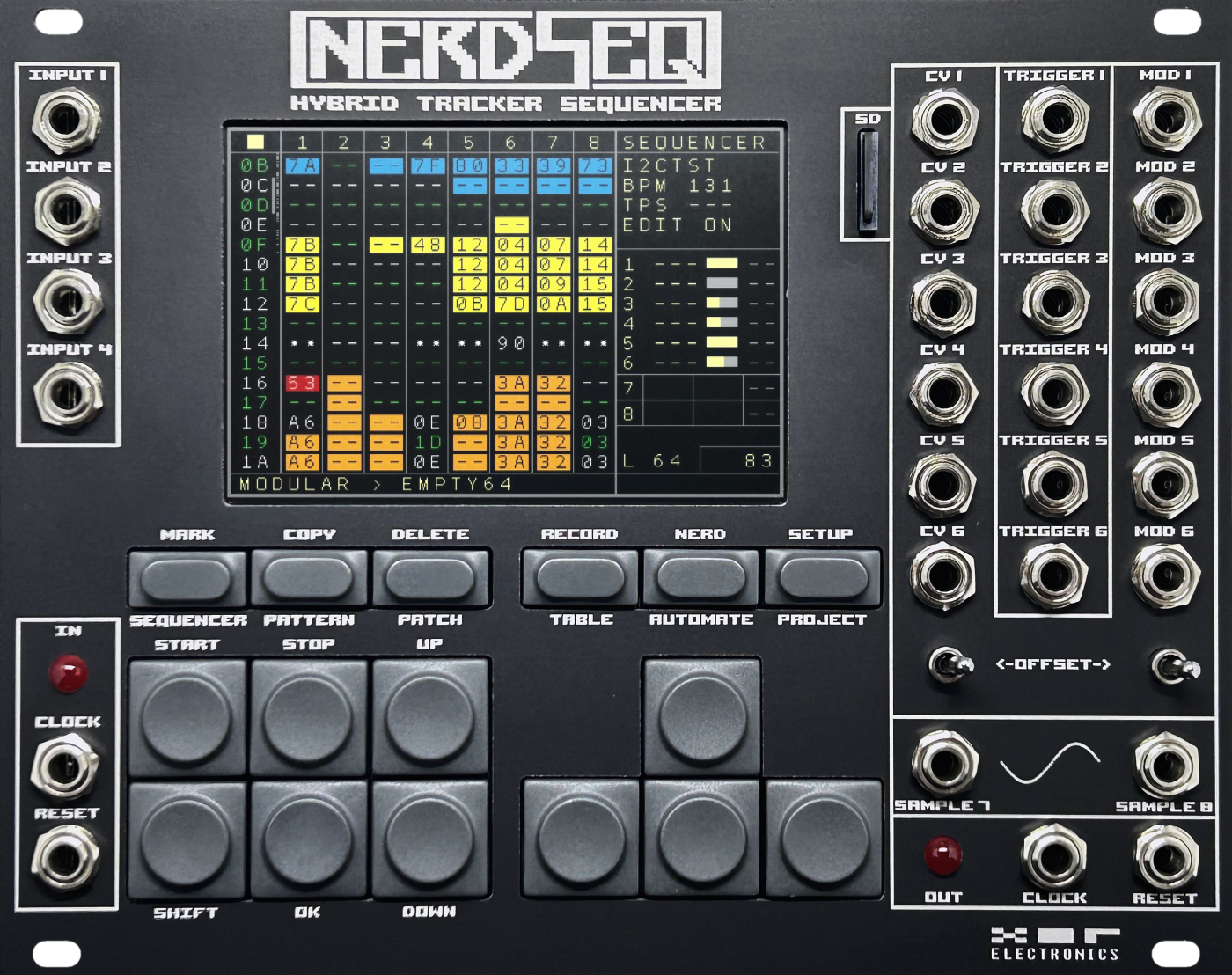
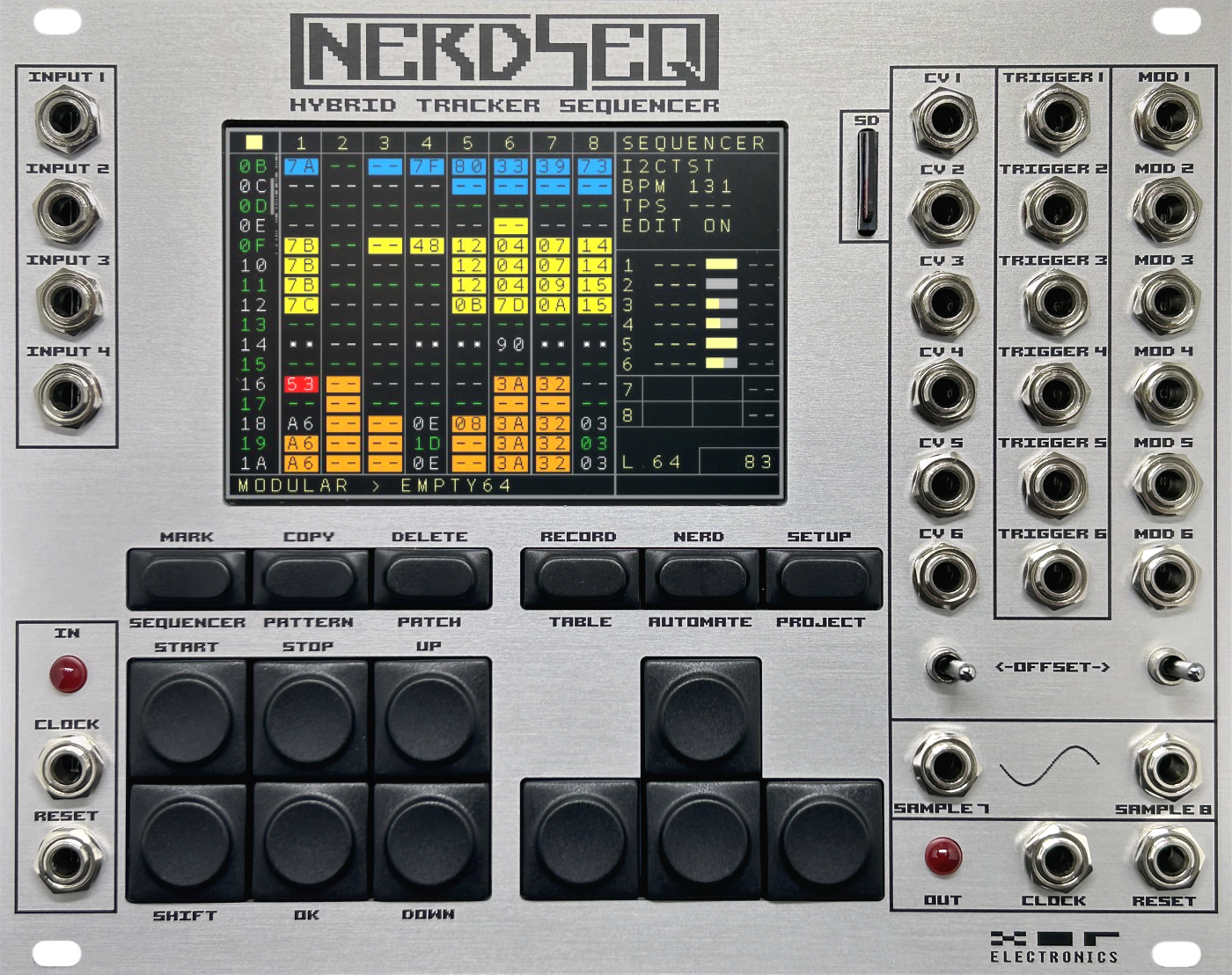
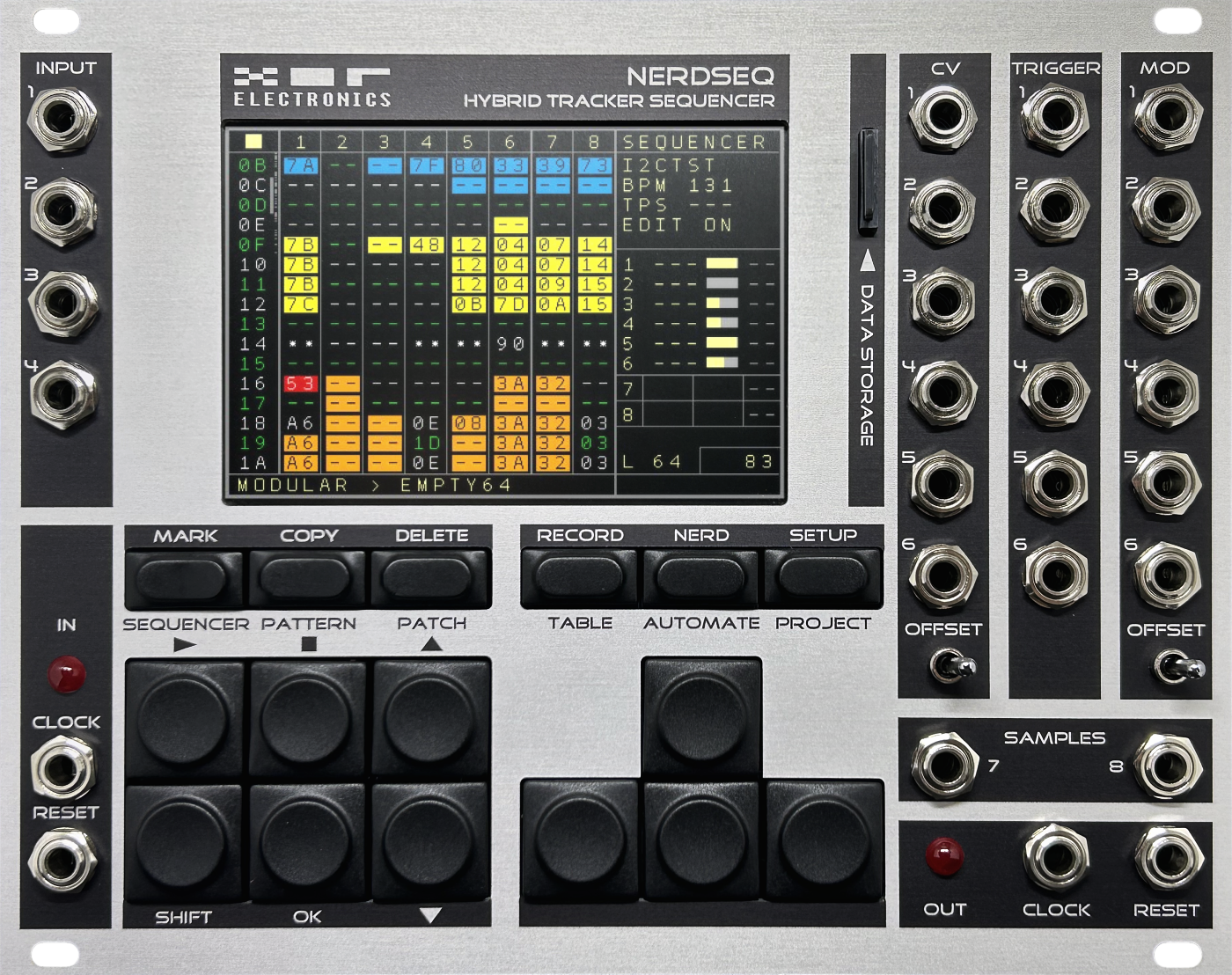
The NerdSEQ sequences six tracks across eighteen outputs, with four assignable inputs, clock and reset in and out, and two audio outputs carrying four tracks of samples and the internal oscillators. Time runs down the screen rather than across it, which is what a tracker gets you: a whole arrangement readable at once, and editing by typing rather than by turning.
It was the first hardware tracker built for a modular system. If you have written music in Fasttracker 2, Impulse Tracker or LittleSoundDJ, you already know how it works.
Sequencing
- Six CV, trigger and gate tracks, plus two pairs of sample tracks.
- 239 sequencer rows and 175 patterns of up to 64 steps, arranged freely.
- Automation, tables, quantize, glide, retrigger, LFOs, envelopes, polyrhythms, groove, probability, dividers and multipliers.
- Euclidean rhythm entry for the Trigger16 Expander.
- Launchpad integration, and live access to patterns as well as arranged songs.
Sound
- Four oscillators with sine, triangle, sawtooth, pulse and noise.
- Four-operator FM synthesis.
- Twelve sample slots; RAW 8-bit mono and WAV 8- and 16-bit, mono or stereo.
Expandable
- Two expander ports take a MIDI expander and up to four further modules.
- With expanders, up to 64 additional outputs can be sequenced.
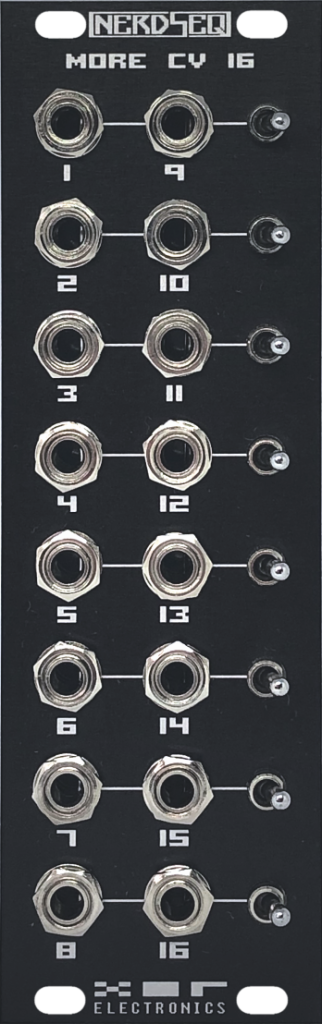
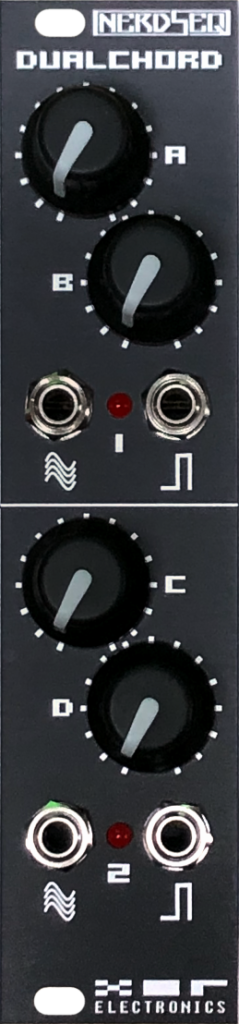
- MIDI, more CV, more triggers, I2C, a multi-oscillator, video synthesis and a Sega gamepad.
Specifications
| Width | 32HP |
|---|---|
| Depth | 2.5 cm |
| Power | ~150 mA (+12V), ~32 mA (−12V), 0 mA (5V) |
| Display | 3.5″ colour IPS, 480 × 320 |
| Controls | 10 full-size and 6 half-size buttons |
| Connections | 28 mono mini-jacks: 4 CV in (0–10V), 12 CV out (−5/+5V or 0/+10V), 6 trigger/gate out (5V), 2 sample out (−5/+5V), clock and reset in and out (5V) |
| Storage | microSD, reachable from the front panel |